Bibliofile Going Gentle Into That Good Night

I just sadly posted this to Bibliofile, the reading log application I’ve had up for several years now:

Well, folks, it’s time for some sad news. Bibliofile is going away on April 4, 2009.

The reasons for this are various. I created Bibliofile because I wanted to learn Ruby on Rails. Rails, however, has advanced at a dramatic clip, and updating this app to work with the current version would take more time and effort than I can spare. Since my web hosting company is moving me to a new host that doesn’t support the old version of rails any longer, I’m afraid it’s time to shut the doors.

There are several good services out there that have already implemented many of the features that I wanted to add here, but could never find the time. Notably, Goodreads and weRead do all of what Bibliofile does, and add a bevy of other nice features as well.

What about your data? A good question! You can already grab it in XML form from the RSS feeds that bibliofile provides. (See the “Share” section.) If you’d like a comma-delimited version to import into Goodreads, let me know — I’ll be happy to arrange to export your data in that format for you.

This is a hard decision for me, but given how limited my time is, I feel that it’s the right one. Thanks for your enthusiasm and support over the past few years! Seeing other people use and enjoy Bibliofile has been, by far, the best part of this little adventure. Godspeed to you all, and keep reading!

Sean
Spring Break 2009

We’ve had a pretty quiet spring break. I’ve been working half days, since the University doesn’t give us proper time off, and have been enjoying the extra time with the family. The big event of the week was a trip to Sea World. (The best time to go in Texas is probably right now, as it’s warm, but not yet blazing hot.)

Here’s a bit of video from the trip:

Wire Tree Prototype

Several months ago I was out in Wimberley, visiting my favorite hill country art gallery, and stumbled upon a huge, lovely tree sculpture made of wire. I was so impressed with the piece that I immediately decided to learn to make something similar myself. So yesterday, I picked up a dollar worth of florist’s wire and found this article. Thus armed, I embarked on my first attempt to prove Joyce Kilmer wrong.

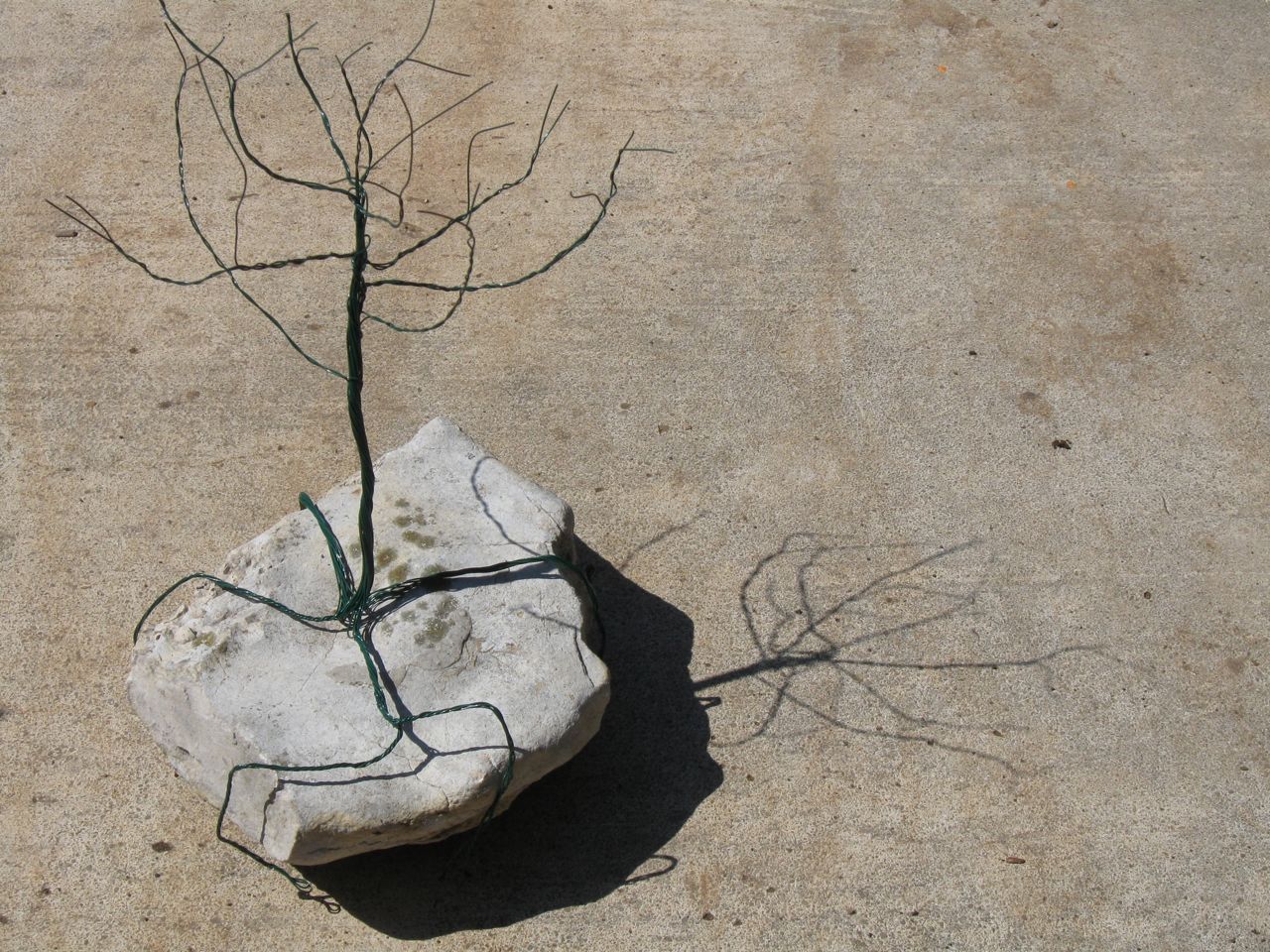
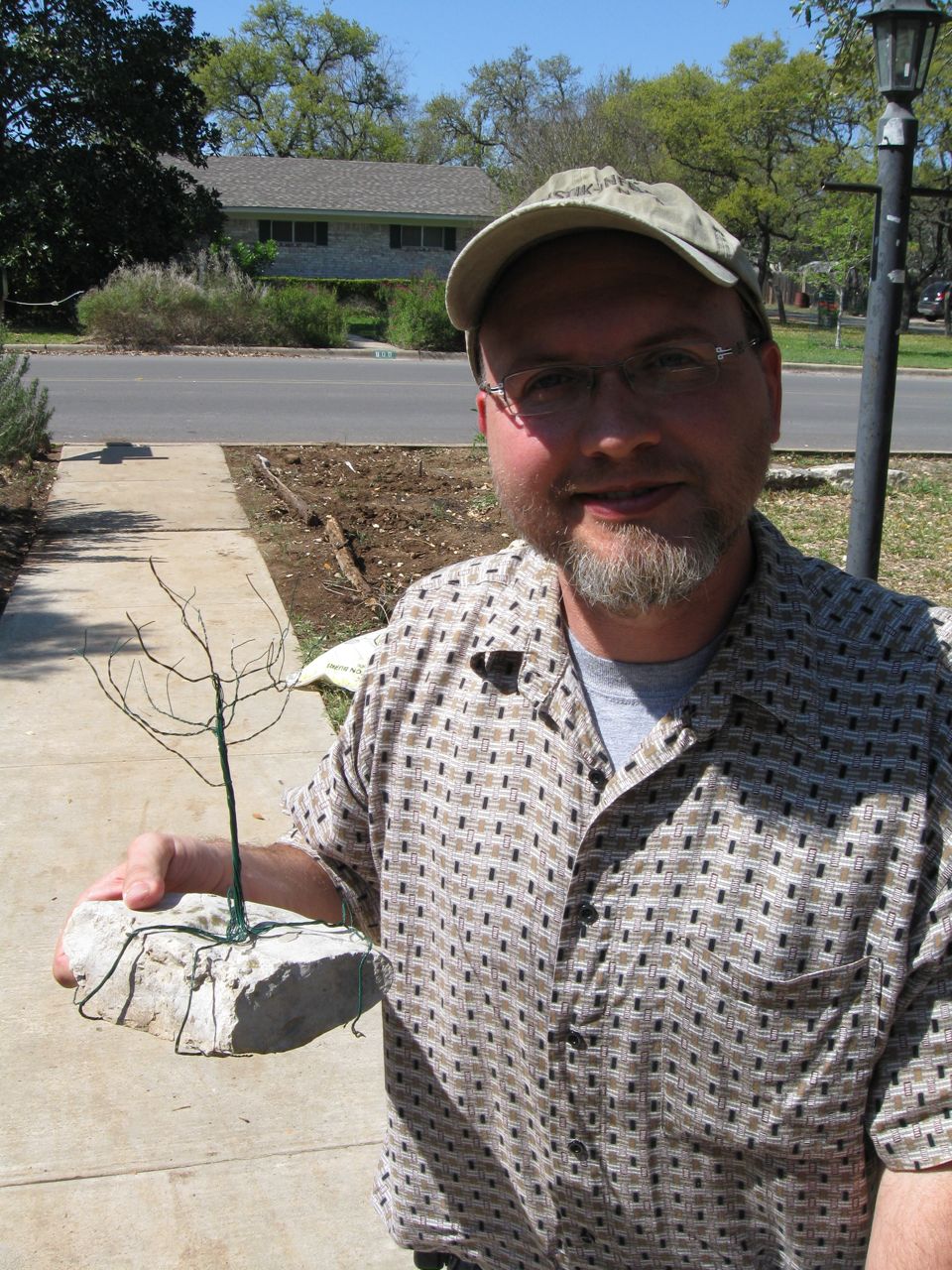
An hour of fooling around with wire and my leatherman in the front yard yielded this:

Tree and Me

Lone Tree

Altogether, a credible first attempt, I think. A few things I learned along the way:

  • Green wire makes everything look like a cactus.
  • While tree roots are, in fact, as extensive as the branch systems, they’re usually below ground. Thus, using only 1/3 of the length for roots makes more sense than 1/2.
  • Modeling the upper branches is hard once the lower ones are done. Next time I’ll experiment with working from the top down instead of the bottom up.
  • Leatherman tools are awesome.
Posted in Art

From the Mixed Up Files of Mr. John Rogers

This earned a tea-snort from me this morning:

There are two novels that can change a bookish fourteen-year old’s life: The Lord of the Rings and Atlas Shrugged. One is a childish fantasy that often engenders a lifelong obsession with its unbelievable heroes, leading to an emotionally stunted, socially crippled adulthood, unable to deal with the real world. The other, of course, involves orcs.

Thanks, Kung Fu Monkey.

Situational Awareness

I’ve long been fascinated by the prospect of wearable computing devices. Having ubiquitous access to information — movie times, news stories, restaurant reviews, product information, word definitions, novels, friends’ locations — seems like such a compelling idea that any talk of such things rivets me. As cellular phones have become more powerful and capable, they’ve become the de facto way for lots of people to access that information. I’m not much of a cell phone fan, but do feel like a comparative dullard when I don’t have an iPod Touch in my pocket.

Thus, MIT’s “Sixth Sense” system seems to me the most drool-worthy bit of technology I’ve seen in a long time. By combining a camera, a cell phone, and a small projector, they’re creating a smart system that watches what’s going on around you and spontaneously provides contextual information. Hold up a plane ticket, and it projects the flight’s status right on the ticket. Walk up to someone, and it recognizes the person’s face and provides name cues and information on that person’s interests. Hold up your fingers in the shape of a frame and it snaps a photo. It’s fascinating stuff, and is nicely demonstrated in this presentation from the 2009 TED conference, which makes me want to move to Boston and apply for admission at MIT.