
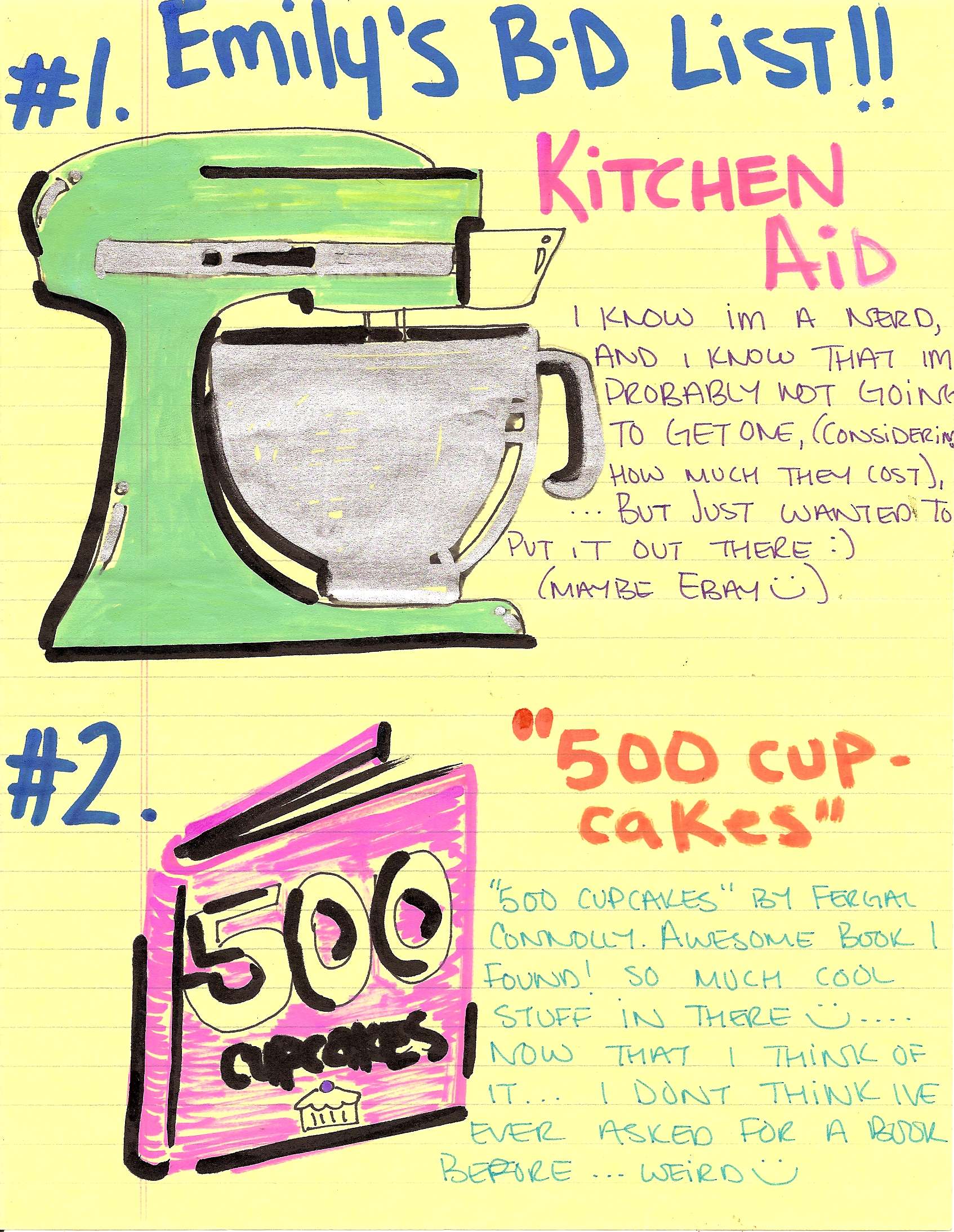
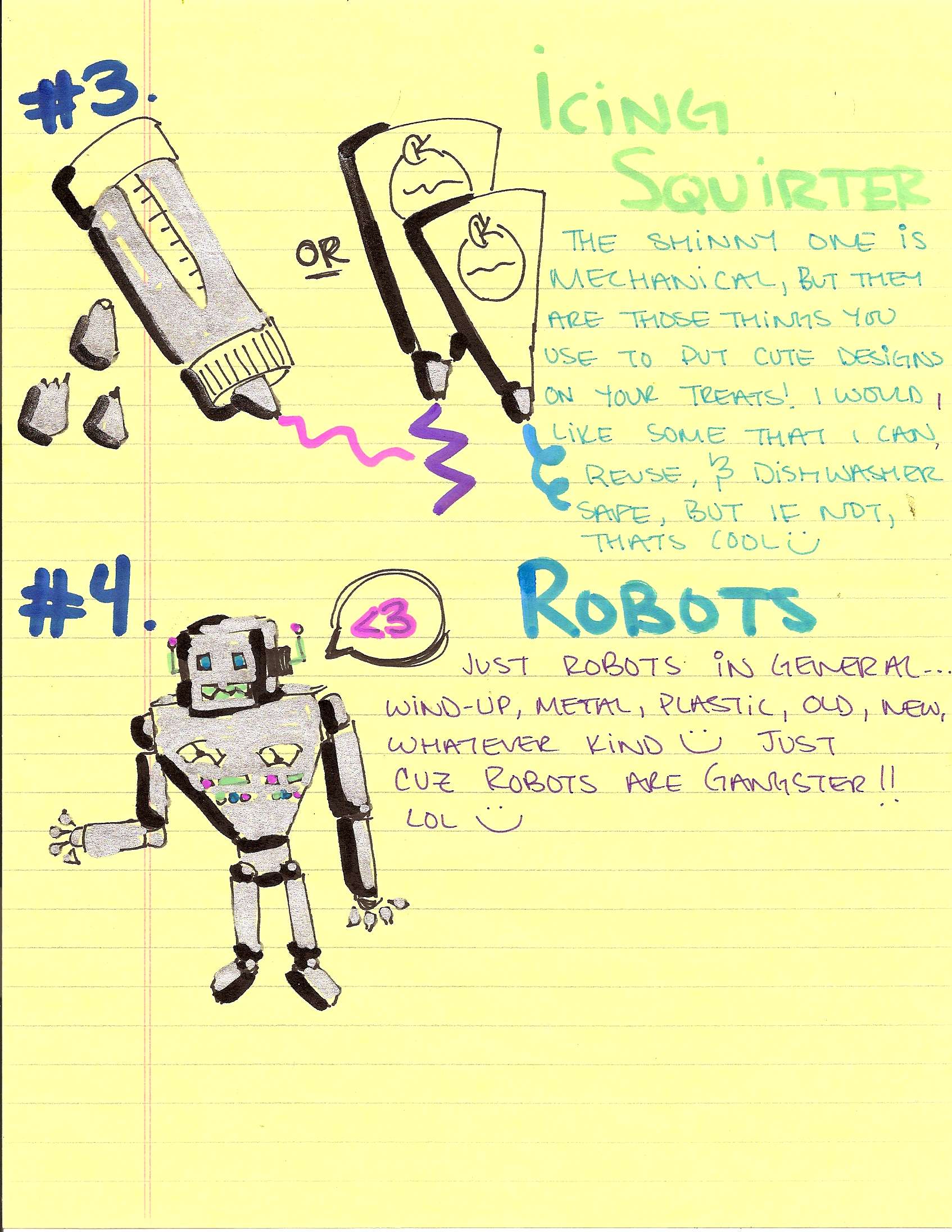
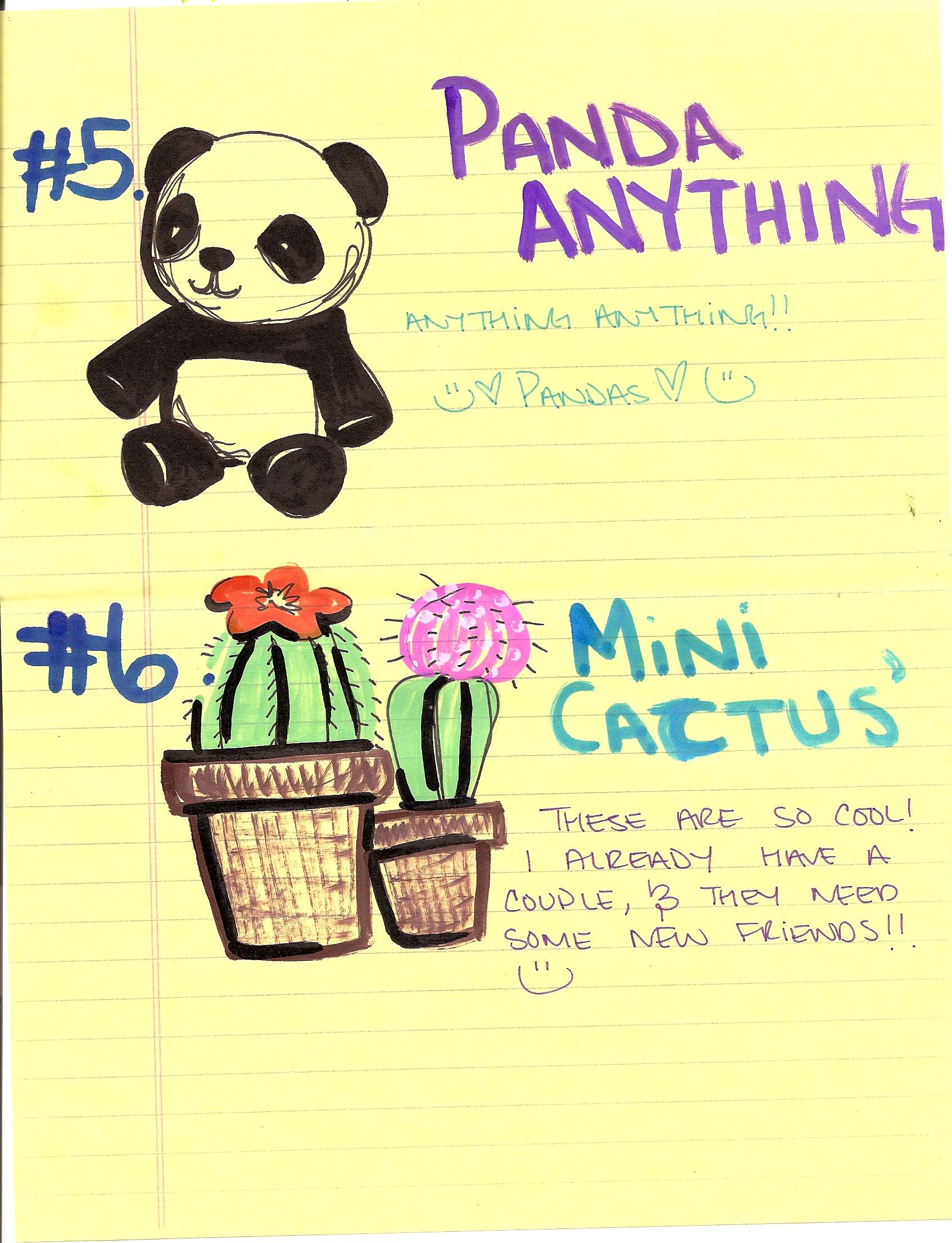
Emily’s birthday is coming up, and true to her artistic nature, she has created a pictorial gift-giving guide:
Monthly Archives: April 2009

Workplace Motivation and Game Mechanics
I manage a crew of about 5 programmers at work. During our performance reviews this year, I asked each of them how I could do my job as a manager better. One of them, in a bit of much-appreciated candor, said that motivation was one of his biggest challenges, and that he would be grateful for anything I could do to help.
This guy — let’s call him Ivan — is a capable programmer, and does good work, but (like all of us) sometimes has a tough time overcoming inertia and focusing on the task at hand. Interestingly, Ivan is also a World of Warcraft player. (World of Warcraft is an online Role Playing Game where hundreds of thousands of people play together in a shared, computer-based fantasy world.) One of the interesting characteristics of online RPG’s like World of Warcraft is that they often require one to do a lot of repetetive, mundane tasks to gain in-game experience and thereby increase your character’s prowess. This is referred to as “level grinding”.
When one is “grinding,” one isn’t doing it for the satisfaction of the task being performed, but for an extrinsic reward of some kind that keeps players at it. In the case of online RPG’s, the reward is an improved character (with a higher level or improved skills), better equipment, the chance to participate in more challenging gameplay, or bragging rights among one’s game-playing peers. Ultima Online, the RPG on which I used to work, would allow the player to link to a web page that showed off her character with her honorifics and arrayed in all her finery.
This sense of accomplishment is one of the things that makes computer games so compelling for many people. In the early days of arcades, the chance to put one’s initials on the High Score list on Tempest was often as big a draw as the gameplay itself. We liked the sense of competition and achievement that list of scores brought with it. More recently, Microsoft did something very clever when they introduced the XBox 360: every game for the system has “Accomplishments” that earn “Gamer Points”. People who play for fun will inevitably rack up a certain number of these, but in order to maximize one’s Gamer Score, one has to again do things that aren’t inherently enjoyable: search out every pigeon in a vast virtual city (and shoot them all), get through a level without firing a gun once, or breed 200 worm-shaped piñatas. One can then put a “Gamer Badge” on one’s website or on Facebook to show the world what you have accomplished as an XBox player. This system has been so successful that Sony has recently copied it for the Playstation 3, introducing a “Trophy” system to the platform with their most recent software update.
So as I looked at all these different mechanisms that games use to take gameplay that might otherwise be uninteresting and make it appealing, I wondered if something similar could be applied to work. After all, try as we might to make the office interesting and enjoyable place to be, the fact remains: if we have to pay somebody to do something, it’s probably not inherently much fun. (There are a lot more musicians who will perform gratis than there are accountants who will do your taxes for no charge.) As I mulled this over, several possible systems came to mind:
- Keeping Score: the simplest approach is that of the arcade games of yore: you get points when you do something good, and try to get the highest score within a given period, say a week or a month. (“Something good” for work purposes might be completing one’s timesheet, successfully fixing a bug, dealing with a support call, or presenting at a conference. Each would have a different point value based on its value to the business and degree of difficulty.) This system has the advantage that it provides pretty quick feedback, and that new folks and people who have worked at a job for a while are on a fairly level playing field. The biggest failing of this approach is that a single score doesn’t tell anything about what things one is doing to rack up the points, so one has less motivation to expand one’s skills than to simply concentrate on areas where one already has facility.
- Classes & Levels: As with the Keeping Score approach, one is awarded “Experience Points” for doing something good. These points are tallied and, when one has accumulated enough, redeemed for “levels” in various classes. For example, after completing a performance review and a month of development work, I might be a “Programmer Level 3; Bureaucrat Level 2”. Levels generally become geometrically more difficult to attain as they get higher, so a new employee would “Level Up” more often than someone who had been working at a given job for a long while. This provides a more nuanced view of what sort of work someone is doing and maps more directly to a traditional RPG mechanic.
- Achievements: With this approach, one has a list of specific tasks to accomplish. For programmers, this might include things like “fix your first bug”, “check in 10 changes to our source control system”, or “get a patch accepted by one of the open-source projects we use.” One accumulates achievements over time, and can see a list of which ones have been accomplished, and which ones are still out there waiting for further efforts. (The requirements for a given achievement can also be kept secret until it’s unlocked.) The advantage with this approach is that one is encouraged to stretch one’s wings and try new sorts of tasks. Unfortunately, it lacks any kind of aggregate view of one’s progress.
At this point, I’m thinking that a hybrid of #1 and #3 might be the best for an office. Each person would have an overall score — perhaps cumulative, or perhaps reset monthly — which would be increased accordingly whenever one did something constructive. In addition, one could unlock achievements by doing specific things. Those achivements would then go on one’s record, and would also provide an extra boost to one’s score.
Whatever system we used would need to have a few specific features:
- As much of it as possible would have to be automatic. Nobody wants to spend all day tallying scores, so it would be important to tie much of this to our existing systems and have them add points without human involvement. Some things, like points for helping a coworker, will inevitably require human tallying, but these should ideally be the exception.
- Part of the fun of accomplishment is being able to show off what you’ve done. We would need to be able to publish the information on scores and accomplishments various ways: website badges, added to our Twitter Status Board, screen savers, etc.
I’d really like to hear from people on what they think of this idea. Is it something you would enjoy having around your office? Do you think it would help with motivation? Do you think any particular mechanic would be a more effective motivator than another? I’m still brainstorming on all of this at the moment, so would welcome any diverse input folks might have on the subject. Thanks for anything you can contribute!
UPDATE: As I’ve been giving this more thought, another mechanic came to mind that I think would be worthwhile. In the game Team Fortress 2, each player is given a score for the match. The points, however, are earned in various categories, and those categories tracked individually. This results in a lot more affirmation, as even if one had a relatively poor game, it might still be your best performance as a sniper, or the most points you’ve earned by healing other players. Being able to lump work points into various categories could easily result in similar kinds of encouragement when they are tallied: “You earned 625 points this month, which is lower than your personal monthly best of 1027. However, you earned 400 points for helping coworkers, eclipsing your previous best of 150 points!”
Tabletop Roleplaying: The Nerdiest Post of the Year
A few weeks back, Liam and I were up in Austin to bring a sick iMac in to the Apple store. After having spent an hour driving up and facing a similar return trip, it seemed silly not to poke around town a bit more before returning. I thought for a bit about what was inexpensive, close by, and would be fun for both of us, and hit upon The Dragon’s Lair, a wonderful games & comics shop that I enjoyed visiting periodically during the time I worked in Austin. The store had moved to a new location since I was there last, but my GPS was fortunately more up-to-date than I was, and brought us directly to the new front door.
Having never been to a store like this, Liam’s eyes bugged out as he surveyed the wealth of comics, games, books, toys and miniatures. He immediately latched on to an immense Heroscape setup, created with the combined parts from several hundred dollars worth of kits, and peppered the players with questions about how the game worked. As Liam learned the intricacies of plastic figure combat on plastic tessellated hex terrain, I wandered over to the section of Role Playing Game books.
Role Playing Games are (for those of you who actually had dates in high school) essentially games where you take on an alter ego and proceed through a series of adventures as this in-game persona. The games are run by a “Game Master” who is responsible for describing the game world and what’s going on therein, while the players tell the GM what they want their characters to do. There’s often a lot of rolling of funny-shaped dice and consulting of tables of numbers approximately seven times more complicated than those used to get Apollo 11 to the moon. There are a truly astounding number of these game systems, specializing in every sort of adventure from time travel to exploring dungeons to being a spy to werewolf vs. vampire battles. The most popular, however, are Dungeons & Dragons and GURPS.
I had recently read Wil Wheaton’s series of posts about running a Dungeons & Dragons campaign for his teenage son and his friends. (Wil Wheaton, for those of you who don’t know a Dalek from a dilithium crystal, played Wesley Crusher on Star Trek: The Next Generation, and has subsequently grown into a fine writer.) Wil waxes eloquent about the fun that they had together playing the game, working together to essentially tell an adventure story together. (Note to grammarians: yes, I split the infinitive. Bite me.) Since I’m always looking for ways to engage with the kids, I thought that one of these Role Playing Games might be worth learning about and trying out together.
After spending a happy 90 minutes poking around the store, watching various games-in-progress, and (inevitably) buying a bit of candy, we headed back home. En route, I asked Liam if he’d be interested in playing an RPG together, to which he responded with an enthusiastic affirmative. I did some searching around on the Internet and asked a few friends for their input, and eventually decided to try running a game using GURPS. While it’s a bit more rules-heavy than D&D, it had two advantages that were compelling: 1. It can be used to run adventures of any sort, not just the swords, orcs, and dragons stuff that D&D focuses on. 2. There’s a “GURPS Lite” book that has enough information to run a basic game and which can be downloaded for free — an important consideration since I wasn’t yet sure what level of appeal this would have for my crew.
I had hoped that there might be a decent premade adventure that I could use for our introductory session, but I had no luck finding something that really fit the bill. Instead, I spent a couple hours designing a small dungeon crawl that would provide opportunities for exploration, combat, a bit of acrobatics, and some diplomacy, and which was small enough in scale that we could complete it in one session. I also found an invaluable tool called GURPS Character Sheet which streamlines character creation by doing most of the number-crunching for you.
Since I knew from my preadolescent time with D&D that these sorts of games are more fun with more people, I enlisted my oft-times partner-in-crime Jason Young to come down and play with us. Maggie and Abigail jumped in as well, so Saturday morning found the five of us gathered around our big table with two laptops, a pile of paper and post-its, and an improvised Game Master’s screen made from scrap cardboard I pulled from the recycling bin and cut up.
Liam created a big, dumb stalwart fighter character with a terrible temper and impulse control problems named Spiritman. Abigail’s character was Esme, a nimble archer. With a bit of help, Maggie created Zoey, a Barbie-pretty sword-wielding elf. And Jason created Gront, a gruff but loyal dwarf he roleplayed with relish.
The adventurers began by stocking up on supplies at the local general store. Because Abigail had chosen a “fear of crowds” disadvantage for her character, I told her that she had to stay at the edge of the town and wouldn’t let her talk while the other players bought the gear. (Disadvantages such as these allow one to improve your characters in other ways, but can be awfully inconvenient at times!) They then ventured into a nearby cave the mayor of the town had comissioned them to explore as part of a land survey.
The cave, as they eventually discovered, was the mostly-abandoned lair of a group of bandits that had operated out of the area in years previous. I had spent a fair bit of time thinking about how such a place would be laid out, so was quite gratified when, as they explored the corridors, Jason/Gront wondered aloud “What is this place? It’s obviously not just a cave. It seems to be designed to be very defensible.”
As they made their way through the darkened halls (lit by a throwing axe wrapped up in branches from a bush and set aflame, since they had forgotten to buy torches), the party tripped over traps, discovered secret corridors, and fought with a brace of rats that had taken up residence in the abandoned Great Hall, stopping only for the occasional real-life bathroom or homemade pizza break.
The interesting thing to me about tabletop RPGs, and the reason that people still play them in the era of World of Warcraft and its ilk, is the unparalleled flexibility one has with a human being running the game. At one point, several of the players’ characters had fallen into a pit that was just a bit too tall for them to climb out of. Having forgotten to put rope on their shopping list, they resorted to stripping the leather pants from one of their characters and using them to extend their reaches and help each other up. It was a very clever solution which wouldn’t have been possible in a computer game, but which I was able to handle on the fly without difficulty. (The dwarf lost his grip and fell, getting a bit banged up when he crashed to the floor below, but everyone else managed the ascent without difficulty.)
After making their way through much of the redoubt, the players came upon the former leader of the cutpurses that used to operate there, now an old recluse who rarely ventured out from his dusty underground domain. Because of his extreme loneliness, he forbade their leaving unless they agreed to come live there and keep him company. The party had the opportunity to fight him, to lie and say they would return, or to agree to move in and make that their base of operations for future adventures. Somewhat to my surprise, they overcame their enthusiasm for battle and agreed to report back to the mayor with a fabricated story about the dangers of the cave and to return to live there.
After misleading the mayor, we wrapped up for the day, six hours after we started. Maggie wandered off a few hours into the session, but Liam, Abigail and Jason all had a great time (as did I). Getting to do something that involved with the kids was delightful, and I was really pleased to see that it held their interest so well while putting their creative thinking (and occasionally their math skills) to the test. They are both enthusiastic about playing some more; Liam especially has already been asking me to put together another adventure for them. So, from a parenting point of view, I count it a solid success.
As a gamer, I did find GURPS a little bit cumbersome, but not too bad given the degree of flexibility it provides. For our next go-round, I think I will go ahead and purchase the basic books and a GM screen, which provides ready access to many of the tables and calculations one uses in play. I’m a bit torn on whether to create more adventures from scratch, or whether to try to repurpose something from a D&D module or another source. (Converting such things to the GURPS ruleset is a bit of work, but not generally too bad.)
And as people who like to build stuff, Jason and I are both intrigued by the possibilities of casting our own miniature characters and dungeon pieces from plaster and lead. (We used post-it notes and graph paper for this first session — functional, but not the height of gaming panache.) The one thing that gives me pause here is that this has the potential to be a terrifically time-consuming hobby. But if I can be spending that time happily and productively engaged with my family, I’d say it’s well worth the investment, even if it does mean I add yet another chapter to the already overlong tome of my nerdiness.